Steps to Becoming a Doctor
Let me share with you the steps on becoming a doctor.
Earning your white coat and stethoscope will not be an easy task but it can be done.
Doctors have to be some of the most hardworking, studious and dedicated people in the world.
The shortest path in the most traditional sense requires 11 years of schooling and training:
- College (4 yrs)
- Medical school (4 yrs)
- Residency (3 yrs)
Those are the main steps everyone who becomes a doctor typically follows.
Now there are some nontraditional paths but I will save that for another time as I just want to give you a broad overview of the process that premeds will embark on their journey in medicine.
Now that the stage has been set let's get started and discuss the first hurdle you'll have to overcome before becoming a physician and earning the M.D. behind your name.
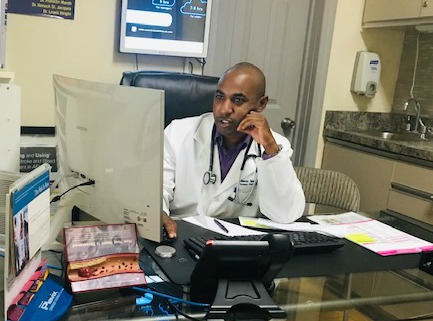 4th year medical student and writing patient notes.
1.) College
College...
the best time of your life they say.
Haha...
Not if you're premed.
I remember at Northwestern University where I attended undergrad the premeds had t-shirts which said, "I can't, I have lab."
Any premed worth their salt knows exactly what I'm referring to.
When you're premed and you're focused on becoming a doctor your college experience is going to be a lot different from your peers.
You'll have a ton of problem sets to complete for your premed science classes which have a laboratory component that lasts several hours where you can be in lab easily for 4 hours at a time.
Medical school requirements include the following premed courses:
- Inorganic Chemistry
- Organic Chemistry
- Biology
- Physics
- Biochemistry
Don't even get me started on premed exams.
They are soul crushing experiences where the exams are super hard.
There's something referred to "weed out" classes which really serve a purpose of forcing premed students to drop out because of:
- Can't cut it academically
- Decide medicine is not for them
You'll notice that throughout freshman year as the weeks and semesters drag on there will be less and less students in class as people come to the conclusion they are not meant to be a doctor.
College Requirements as a Premed
As a premed in college your life is a bit different.
Your main focus is on getting into medical school.
I will tell you that I personally sacrificed my non-science courses for my science courses always telling myself, "your science GPA matters the most."
Don't do like me though where you have to meet with your Spanish Professor because you're not making satisfactory progress in his course despite testing out of the first year of Spanish.
Because I wasn't focused on Spanish it meant my final exam would determine if I would pass his Spanish class or not.
I wasn't dumb or anything I just didn't pay the class attention because I was focused on general chemistry.
You can only the shock on my professor's face after he graded my final exam and I passed with flying colors and ended up with an overall grade of B in his class.
From that point onwards, I decided that I needed more balance and couldn't jeopardize my non science courses in my quest of becoming a doctor.
I took all of my academics seriously.
But there's a huge hurdle while a premed in college.
You actually have to take a test called the Medical College Admission Test (MCAT).
This is a national test everyone must take and earn a competitive score if you want to get into medical school. The easiest way tot think about it would be to recall the:
- SAT/ACT
- GRE
Except the subject matter is for medical school.
Clearly the MCAT is a high stakes exam for getting into medical school and it actually is weighed the most in a medical school admission decision.
So not only do you have your premed courses, the MCAT but you also need to pursue extracurricular activities to show medical school admissions officers (AdComs) that you belong in medical school.
It's a brutal process for sure if you are set on becoming a doctor and is not easy by any means.
But every year thousands and thousands of premed students will embark on the journey.
2.) Medical School
Getting into medical school means you are literally set for life... welcome to the doctor life.
However, there's a lot that you have to overcome.
I remember being on my Family Medicine rotation during my 3rd year of medical school and speaking with one of the doctors.
She was stating how her daughter was going to be applying to medical school and in the conversation she stated, "The hardest part of medical school is getting in."
So true, so true.
Did you know?
Over 60% of applicants to medical school are rejected, Ouch!
But that doesn't have to be you. I can help you dramatically improve your chances of getting into medical school so that you become a doctor.
The process of applying to medical school is not for the faint of heart either.
You have the MCAT as I mentioned. Plus you'll need a primary application, secondary application, medical school interviews and this is just the tip of the iceberg when applying to medical school.
Plus, the application cycle for medical school is nearly a full year with applicants submitting applications in June and it can be as late as March/April/May before some schools finalize their incoming class.
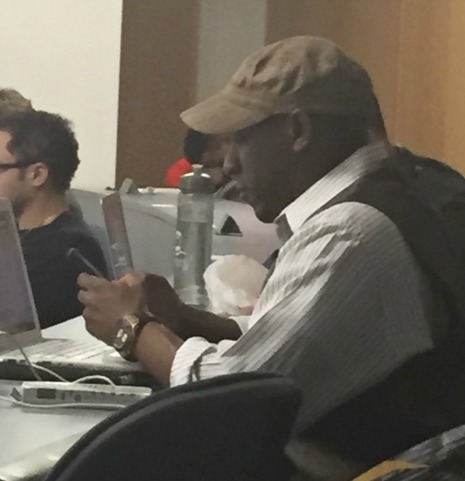
Here's me in medical school during the basic sciences where lectures held in a large auditorium.
First Two Years of Medical School - The Basic Sciences
Medical education can be divided into two phases each lasting two years:
- Basic Sciences
- Clinical Rotations
The basic sciences are your traditional medical school curriculum that most people are familiar with as the learning takes place in the classroom or the anatomy lab.
You can go learn more about the subjects taught in medical school along with how long is medical school too.
Patient safety is paramount and comes before anything else.
A safety mechanism in place to ensure patient safety means having medical students successfully take a pass a series of standardized exams called the United States Medical Licensing Examination (USMLE Step 1) which is a comprehensive full day exam covering all of the material you learned during your first two years of medical school.
You will have to pass your Step 1 in-order to become a doctor and most medical schools require this exam to be taken within a certain time frame before seeing patients while on your clinical rotations.
Ideally, you will take the USMLE after your second year of medical school just before starting in the hospital as a 3rd year medical student.
Clinical Years of Medical School
The last two years of medical school are devoted to your clinical rotations/clerkships.
This is where you spend time in the hospital and health clinics learning and observing from physicians on how to become a doctor. You rotate through a number of core medical specialties including:
- Surgery
- Emergency Medicine
- Psychiatry
- Internal Medicine
- Neurology
- Obstetrics/Gynecology, etc.
In 3rd year you need to have a solid foundation in the core disciplines of medicine where you can finally put your book knowledge to the test by seeing and treating patients under supervision of licensed physicians.
Finally, you make it to your 4th year of medical school where you have to decide "what type of doctor" do you want to be.
Also you have to take the USMLE Step 2 which now covers how to be a doctor and how you go about treating patients.
You'll complete a few core rotations but the majority of your time will be spent becoming a doctor in your chosen medical specialty.
This means going on audition rotations and interviews at residency programs to see if you are a good fit for their residency program.
Ultimately, you will rank your top programs and the programs will rank their top applicants and a computer will determine where you "Match".
The Match takes place in March of each year and all fourth year medical students across the country find out on the same day where they will be doing their residency training.
However, aside from knowing where you will be doing your residency training while on the road to becoming a doctor one major hurdle is crossed when you actually graduate from medical school in Spring of your 4th year and are officially a Medical Doctor.
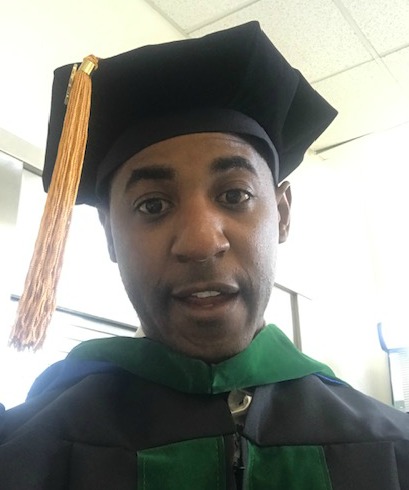 Becoming a doctor the moment every premed dreams of.
3.) Residency Is When Becoming a Doctor Is a Reality
You're a doctor now, but you don't know the ins and outs of practicing medicine.
Residency is the time where you learn the everyday skills of being a doctor and you can think of it as an apprenticeship.
This is a very intense period of training and the most grueling aspect of becoming a doctor.
At a minimum you will be spending over 80 hours a week working in the hospital.
The first year of residency is referred to as an internship. Then it's onto what's called residency training.
Your residency years will vary depending on what medical specialty you MATCHED into during your 4th year of medical school.
Residencies can range anywhere from three years upto seven years. The shorter residencies include:
- Anesthesiology
- Family Medicine
- Emergency Medicine
- Obstetrics/Gynecology
- Internal Medicine
The longer residencies (four to seven years) include:
- General Surgery
- Ear Nose & Throat
- Neurosurgery
- Orthopedic Surgery
- Plastic Surgery
- Radiology
As you can see the longer residencies are where you have to learn how to perform specific procedures which can only come through practice and lots of it.
Again, the best way to think about your residency is to think of an apprenticeship or being a very lowly paid intern in the working world.
Once residency is completed you can take the boards and become certified by a national organization of your medical specialty and licensed by the state to practice medicine on your own.
4.) Fellowship
Some physicians do not stop their training after becoming a doctor so once residency is complete they elect for more training and further subspecialization.
For instance, a radiologist can complete a diagnostic radiology residency and then complete a one-year fellowship in interventional radiology.
Many general surgeons will sub-specialize for one to three years:
- breast surgery
- bariatric surgery
- thoracic surgery
- colon & rectal surgery, etc.
Also an ob/gyn can go on to a three-year fellowship in pelvic surgery.
As you can see there is a lot of training which goes into becoming a doctor.
Wrap Up
Becoming a doctor is not a short or quick process, but I believe the rewards far outweigh the costs. In sum, you will spend anywhere from seven to twelve years after college training to become a doctor.
My philosophy for those who say that the steps to become a doctor require a lot of time is simple:
Time waits for no one and will pass you by regardless of your career choice so you might as well pursue medicine if it's in your heart.